US$- 2590 Per Person US$- 2700 Per Person
Lorem Ipsum is simply dummy text of the printing and typesetting industry. Lorem Ipsum has been the industry's standard dummy text ever since the 1500s, when an unknown printer took a galley of type and scrambled it to make a type specimen book. It has survived not only five centuries, but also the leap into electronic typesetting, remaining essentially unchanged. It was popularised in the 1960s with the release of Letraset sheets containing Lorem Ipsum passages, and more recently with desktop publishing software like Aldus PageMaker including versions of Lorem Ipsum.
When is the best time to Climb Mera Peak?
Lorem Ipsum is simply dummy text of the printing and typesetting industry. Lorem Ipsum has been the industry's standard dummy text ever since the 1500s, when an unknown printer took a galley of type and scrambled it to make a type specimen book. It has survived not only five centuries, but also the leap into electronic typesetting, remaining essentially unchanged. It was popularised in the 1960s with the release of Letraset sheets containing Lorem Ipsum passages, and more recently with desktop publishing software like Aldus PageMaker including versions of Lorem Ipsum.
How difficult is Mera Peak Climb? Do I have to be super fit to plan this climb?
Lorem Ipsum is simply dummy text of the printing and typesetting industry. Lorem Ipsum has been the industry's standard dummy text ever since the 1500s, when an unknown printer took a galley of type and scrambled it to make a type specimen book. It has survived not only five centuries, but also the leap into electronic typesetting, remaining essentially unchanged. It was popularised in the 1960s with the release of Letraset sheets containing Lorem Ipsum passages, and more recently with desktop publishing software like Aldus PageMaker including versions of Lorem Ipsum.
Welcome to Nepal! Your adventure begins as you touch down in Kathmandu on this first day. We understand that you've been eagerly anticipating this journey, and our representatives are ready to ensure your smooth transition from your flight to your comfortable hotel. After a warm welcome in the hotel, you'll have time to relax for a while. Further, for the remainder of the day, you will have an opportunity to familiarize yourself with the nearby areas and do shopping to fulfill your checklist for the trek. After you are done with the shopping, our team member will give you a brief introduction and provide valuable information about the trek in the evening. Overnight at the hotel in Kathmandu.
Hotel, Lodge
Lunch, Meal
Today is going to be very special. Following breakfast, we will go on a day tour of the Kathmandu Valley, visiting several UNESCO World Heritage Sites, including Kathmandu Durbar Square, Patan Durbar Square, Bouddhanath, Pashupatinath Temple (Cremation site), and Swyambhunath Temple (Monkey Temple). Our knowledgeable tour guide will accompany us on this tour. After finishing the tour we will take you back to the respective hotels in Kathmandu. Overnight at the hotel in Kathmandu.
Hotel, Lodges
Lunch, Breakfast
Today from Kathmandu, you will take an early morning flight to Lukla. On this flight, you'll experience the thrill of landing at one of the world's most renowned and challenging airports. This flight will only take about thirty-five minutes, giving you plenty of time to take in the breathtaking Himalayan vistas. Right after landing on Lukla, you will be introduced to porters and shortly after, you will start the trek from the Dudh Koshi bank. It will take you about 3 and a half hours to reach Phakding. After some time rest, walk up to the monastery as an evening walk to get acclimatization. As a rule, you always climb high and sleep low. It helps to complete the trek without medication. We do every day until we reach the Everest Base Camp. Overnight at the lodge in Phakding.
Hotel, Lodges
Lunch, Meal
Today is a critical acclimatization day. To get used to the low oxygen levels, we will spend the day in the nearby Namche Bazaar. For that, we can do a short trip to the museum that showcases the customs of the Sherpa people. In addition to it, we'll trek up to the Syangboche airport and Everest View Hotel, which has been listed as one of the world's highest hotels. From this point, we get spectacular views of the Himalayas, including Mount Everest and its neighboring peaks. After completing the short trip, we will return to Namche Bazaar for an overnight stay.
Hotel, Lodges
Lunch, Meal
If this itinerary doesn't suit you and you'd like to create your own, let's talk now!
Your meals during your stay in Kathmandu will be on a bed & breakfast plan. We will host a welcome dinner and a farewell dinner in Kathmandu. Any additional meals during your stay will be at your own expense.
During the trek, your meals are included as part of our package. You will have a choice of breakfast, lunch, and dinner, as well as tea/coffee during your trekking days with us. We will source food for your group from guesthouses, prepared by trained local chefs. We take care to ensure that your food is fresh and hygienic.
During the climb, your meals is cooked by our Sherpa Cook, and support team. They prepare fresh, hygienic food, and boil the water for drinking.
For this trip, we use 4-star deluxe luxury hotels in Kathmandu to ensure your stay is comfortable. During the trek, you will be staying in mountain lodges and guest houses owned by local Sherpas, offering a nice and comfortable experience. You will have hotel with attached bathroom staying in Lukla whereas other places will have regular Sherpa Community Lodges which are clean, neat and comfortable.
During your climbing days, you will be staying in two men tented camp (At Mera Base Camp & Mera High Camp).
We have compiled a list of departure dates for Mera Peak Climbing each month. Please feel free to select a date and time that best suits your schedule. In the event that none of the listed dates align with your availability, kindly inform us of your preferred date and time, and we will gladly accommodate your request. As a personalized tour and trekking operator in Nepal, we predominantly offer private departure dates for this climb.
However, if you prefer to climb Mera Peak in a group, please let us know. We will have no trouble organizing this climb as a group departure on a date and time convenient for you.
This is a Tough+ trek. It is activity level 9 with 16 days walking and full porterage throughout. The maximum altitude is 6,189m (or 5,545m without Island Peak) and the average is 3,680m. There are some steep ascents and descents and some narrow trails. As this trek also ascends to very high altitudes participants should be confident of their physical fitness and must have previous experience of trekking at altitude and in snow.
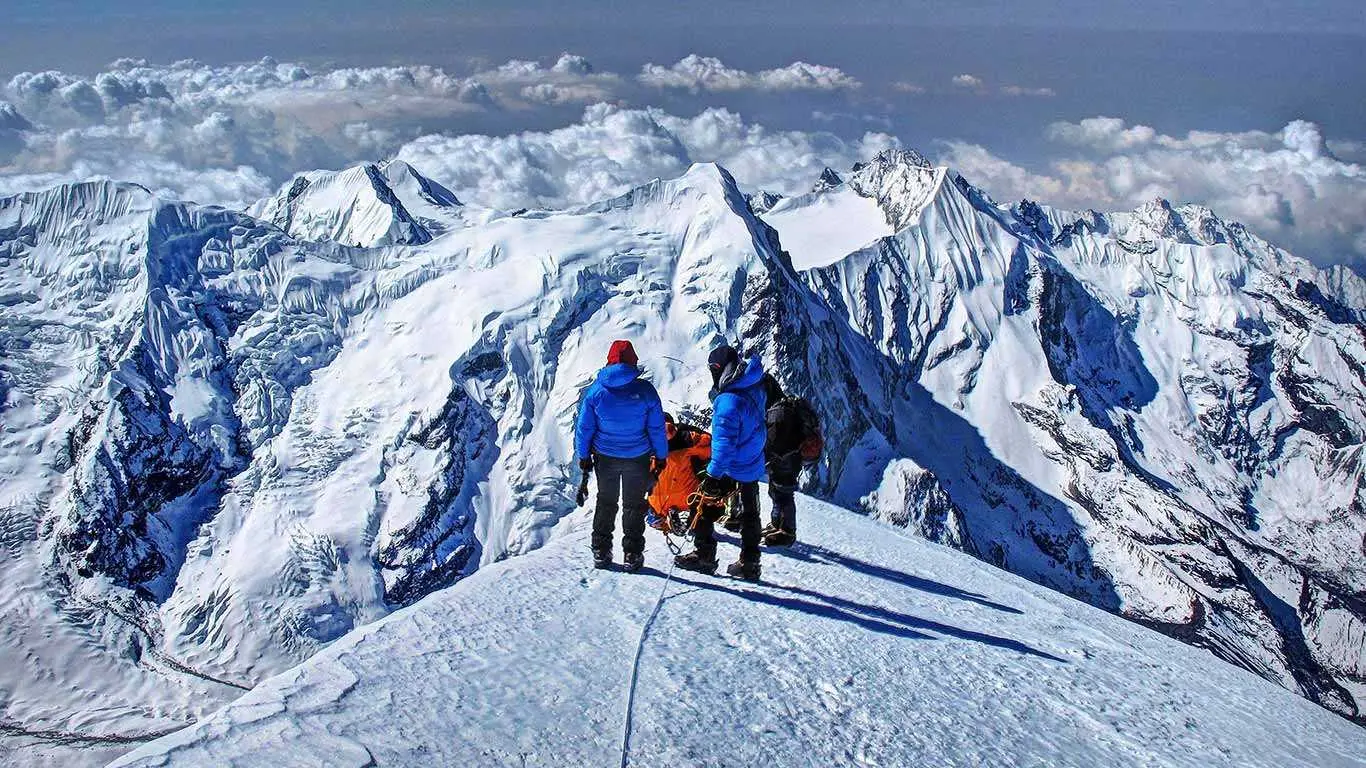
Although it is not compulsory to participate in the climb (the summit attempt is optional), anyone who does must have previous ice axe and crampon experience and know how to use a jumar and abseil device. There will be equipment checks and practice sessions for rope use, ice axe, crampon and harness use, abseiling and crevasse rescue. For safety reasons it is compulsory to participate in these sessions. If you do not take part the leader and climbing Sherpas will not allow you to take part in the climb.
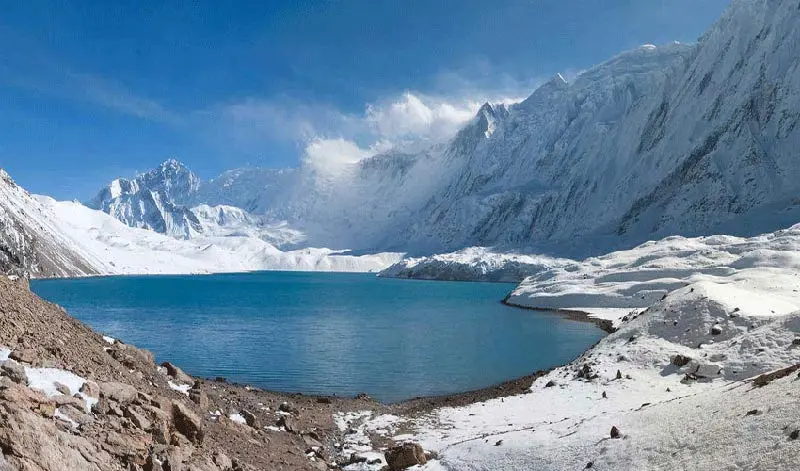
The best and suggested time to trek to Everest Base Camp are Mid-September to Mid December (Autumn) and March to late May (Spring). However, this trek is possible year around. We suggest you to trek during the best time of year but we can organize if you need to trek during the monsoon or winter. During the winter it can be done with proper winter gear.
Yes, you need a sleeping bag sleeping bags rated -10°C (14°F) to -20°C (- 4°F) as per the trekking season you plan. Also, our guide can provide you an extra blankets if needed at the teahouses. It is always good to have a liner which you can buy here in Kathmandu or you can bring from home.
Yes, you can buy gears in Kathmandu at better price than your home but quality may not be the same. There are some branded items like Rab, North Face, Black Yak, Marmot etc. There are local brands as well. You can rent sleeping bags and down jackets but the other items you need to buy.